There is a useful discipline in stepping outside the industry echo chamber.
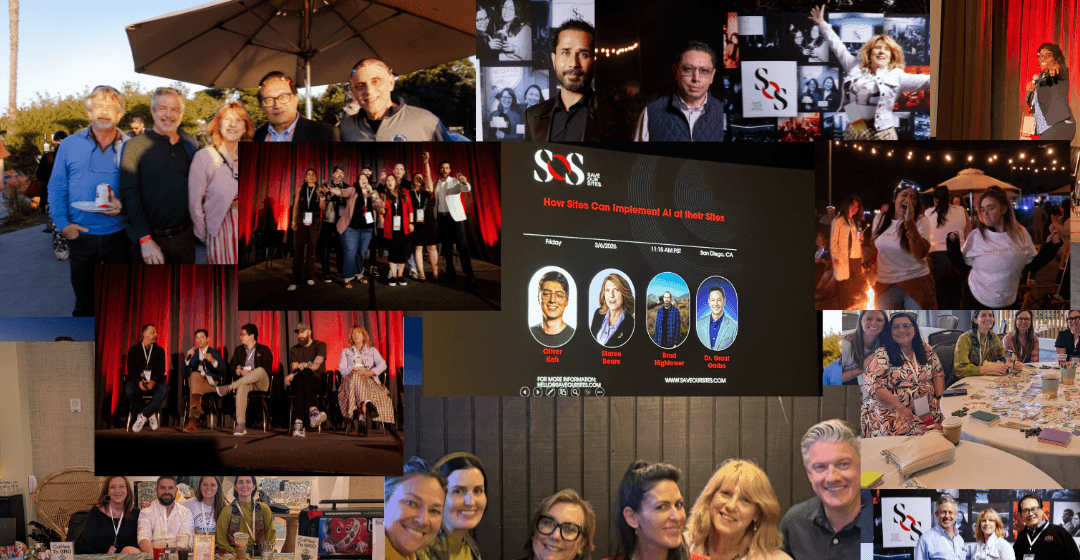
The SOS Save Our Sites Conference does exactly that. No theatrical keynotes. No over-engineered narratives. Just clinical research site leaders, operating at the interface between protocol and patient speaking candidly about what is working, what is breaking, and what is being held together through sheer commitment.
That signal matters more than any trend report.
The System Runs on Site Leadership, but It’s under strain
If you want to understand clinical trials, start at the site.
Site leaders are not motivated by strategy decks. They are motivated by patients who are waiting, often urgently, for access to trials. That proximity creates a level of accountability and realism that is difficult to replicate elsewhere in the ecosystem.
But that same layer is under sustained pressure.
Financial instability is no longer a background issue. Rising costs, delayed sponsor payments, and underfunded study budgets are eroding operational viability. This is structural misalignment. When sites are treated as downstream executors rather than upstream partners, fragility is the inevitable outcome.
Sponsors and CROs are beginning to acknowledge this. The shift now needs to move from recognition to redesign.
Recruitment Is Still the Constraint but not for lack of effort
Despite years of focus, recruitment remains the single largest bottleneck.
The causes are well understood:
Overly restrictive eligibility criteria
Low patient awareness
Increasing competition across concurrent trials
What is less discussed is how sites respond.
What stood out was the openness with which site leaders share recruitment strategies, hard-earned, operationally grounded, and often undocumented elsewhere. There is a quiet sophistication in how experienced coordinators navigate these constraints.
The industry would benefit from systematising this knowledge, rather than repeatedly rediscovering it.
Technology Is Adding Load, Not Removing It
There is an uncomfortable truth emerging across site operations:
Technology, as implemented today, is often increasing burden.
Sites are managing a growing stack of sponsor-mandated systems while simultaneously facing staffing shortages and burnout. Findings from the Society for Clinical Research Sites Site Landscape Survey reinforce this where operational overload and workforce constraints remain leading threats to sustainability.
The issue is not the presence of technology. It is the absence of integration and role alignment.
If a tool does not reduce cognitive load for coordinators, it is not solving the right problem.
AI Is Entering the Conversation, But Precision Matters
AI is no longer theoretical in clinical research operations. The question has shifted from if to where it actually delivers value.
The most credible use case emerging from site discussions is protocol intelligence:
Feasibility summaries generated directly from protocol documents
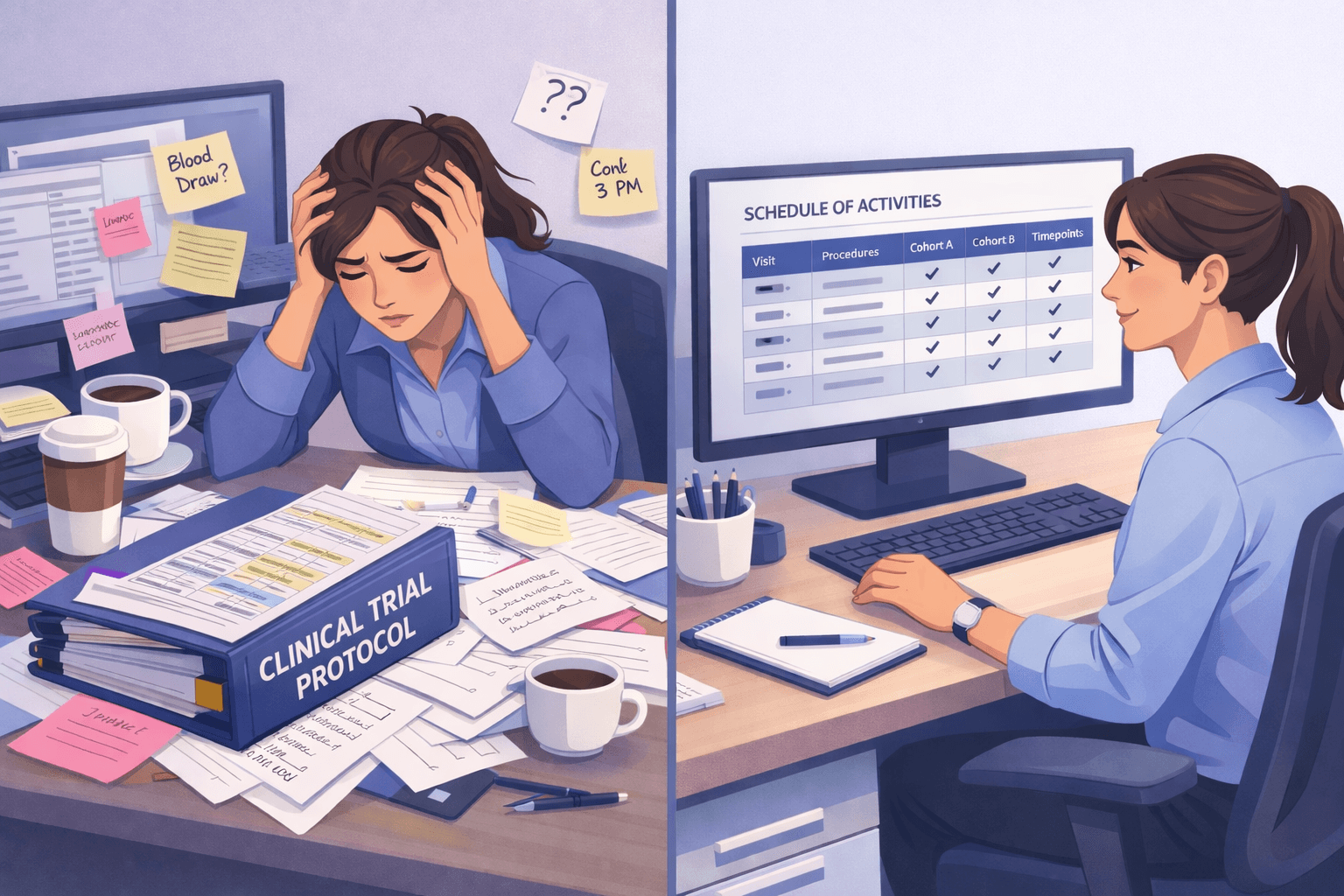
Automated schedules of events
Source documentation templates
Patient-facing materials translated into plain language
This is not about replacing clinical judgment.
It is about removing the administrative layer that surrounds it.
Sites are clear-eyed about this distinction—and rightly cautious. Adoption will not come from capability alone, but from demonstrable reductions in workload, auditability, and alignment with real workflows.
Build vs Buy Is the Wrong Framing
The industry is now asking whether sites should build AI capabilities internally or partner externally.
In practice, most sites do not have the infrastructure, data pipelines, or governance frameworks required to build safely at scale. Nor should they.
The more relevant question is:
Which solutions are purpose-built for clinical operations, and which are simply repurposed tools creating additional risk?
This is where discernment, not experimentation, becomes critical.
A Structural Truth the Industry Can No Longer Ignore
The clinical trial ecosystem depends on strong, well-supported research sites.
This is not a sentiment. It is a structural dependency.
When sites are under-resourced, overburdened, or financially unstable, every downstream metric, recruitment, timelines, and data quality degrades accordingly.
Encouragingly, there is a shift underway. Sponsors and CROs are increasingly recognising that sites are not delivery mechanisms. They are the point where scientific intent meets patient reality.
That recognition now needs to be operationalised.
Where Clinials Fits
At Clinials, the starting point is simple:
Coordinators should be focused on patients, not paperwork.
Our platform transforms complex protocol documents into structured, site-ready outputs with full citation traceability. This ensures that every generated artefact, whether operational or patient-facing can be validated against source material.
Beyond the platform, we are expanding into advisory support:
Pipeline growth strategies for sites
AI-enabled workflow design
Practical implementation models aligned to real-world operations
For sites asking, “Where do we even begin?”, that is precisely where we engage.
Final Reflection
To the organisers of SOS Save Our Sites Conference: the industry needs more spaces like this where signal outweighs noise.
To the site leaders: the weight you carry is visible. The system functions because of it.
The next phase of clinical research will not be defined by more tools.
It will be defined by whether we reduce friction where it matters most.
Clinials
Turning protocol complexity into site-ready clarity so coordinators can focus on what matters most.